Showing posts with label Homage. Show all posts

Sunday, April 18, 2010

Our Grandmothers Were Green


On the original cover of her classic memoir-cookbook The Taste of Country Cooking, Ms. Edna Lewis stands, lithe and muscular, in a green field looking over the fruit shc's selected for making a meal. Her face is serene and contemplative. She's magnetic and seems to beam though she is not smiling. Her hair, perhaps lightly hotcombed, is as natural as the food she puts on her table. She wears the long, cottony silver strands brushed away from her face and tucked in a neat chignon gathered in back of her head. Contrasting with her simple, starched cotton dress Miss Edna's only flourish is a pair of dangling ornate silver earrings that lend a little of the Far East to her look.

Music. Food. Writing. It's said that all of these absorb all of the elements and energy that go into the making of them. When I see Ms. Edna's face and read what she has to say, it brings me calm because I get a sense of some of those things that went into the making of her. She is earthy and elegant, full of culture, memory and vitality. The kind that Alice Walker writes about in "Longing to Die of Old Age" (from Living By the Word). A foremother to ones like Dori Sanders.

A friend who knows how much I take to heart Jessica Harris' words that "There is history in the pot," recently sent me this "What is Southern?" piece, a prose poem/letter written by Edna Lewis and published a couple years back in Gourmet magazine. I'm sharing with the hope that we all enjoy, remember, preserve and do all we can to pass forward these traditions. Even if it's just telling the story that begins with the words, "There once was a time when..."

Sunday, November 29, 2009

Up in the Heavens, Down on the Earth

Drive through the blighted section of any city and you will find an MLK Avenue, Drive or Street; in these same communities there is invariably a school, rec center or housing project named after hazily recalled historical figures like Phyllis Wheatley, Crispus Attucks, Frederick Douglass, Mary McCloud Bethune, Ida B. Wells, George Washington Carver and Benjamin Banneker. Funny how history can immortalize a name but dispose of details that made these individuals shine during his or her lifetime. The simplified biographies of Banneker and Carver tell that one was an almanac writer, the dude who laid out the plans for Washington, D.C. and that the other was the an Uncle Tom who could work wonders with the humble ground nut. What else is there to know? A lot.


My accidental intrest in Banneker and Carver came from essays and biographies of black women authors from the United States. Remembered conversations with my friend and visual artist/poet/philosopher/curator Kevin Sipp . This, in turn, linked to my interest in food and nutrition, intercultural relationships, as well as the present green and technological revolutions (that have some common but many conflicting goals) are some of what has made me curious about the these scientists, neither of whom had children but both of whom were fruitful in terms of their creative output.

Though born during the U.S. colonial era, the reach of Banneker's imagination was saved from the near-sightedness often inflicted upon and that afflicted many of the enslaved. In large part this was probably true because Banneker was born free to free-born parents. His was of a materially stable landowning family and partly descended from a British grandmother named Molly (Walsh) Bannaky . Molly Bannaky not only taught her grandchild the fundamentals of literacy but may also have been responsible for passing along the cultural wisdom of her deceased Dogon husband to their mixed race family. Banneker knew how to play the flute and violin and would grow to become a farmer, mathematician, writer, land surveyor, astronomer and social reform advocate with each interest flowing freely into the next. (For more on the Banneker history see this review and synopsis of Charles Cerami’s well researched Banneker biography. For more on the Dogon people's relationship to astronomy, see Sacred Sites of the World website.)

Carver was born in the Midwest many years after Banneker under less privileged circumstances. He spent his childhood as a slave, and on top of this had the misfortune of becoming an orphan; both left him with a shaky sense of belonging. His owners were said to have abolitionist sympathies that ran parallel to their need to keep slaves and make a living. They were therefore open to Carver learning to do things like read, paint and make music. In later years, Caver's path would lead him to rise higher than Banneker in terms of his formal education, earning a master’s degree and going on to become a fellow of the British Royal Society for the Arts and advisor important public figures and politicians. He was botanist, chemist, teacher, writer, enviromentalist, philanthropist and devout in his religious faith. (For more on Carver, check out Gary Kremer's George Washington Carver: In His Own Words and Tonya Bolden's children's book )


All of the above is very interesting to me. But what I find most fascinating about Banneker and Carver has to do with the inclusiveness, the holistic nature of their study. Their genius arose because of the way that they seemed to connect intellectual pursuit to development of the spirit. Their minds and hearts were open enough to thread together observations and knowledge that some might be tempted to view as separate. I see them as being spiritual descendants of the multifaceted ancient scholars of the East-- anonymous indigenous sages of all continents as well as the noted Middle Eastern hakeems and European renaissance men-- who were as well versed in poetry as they might have been in mathematics, astronomy, and navigation. All of them took serious the atom as universe idea/universe as atom idea, aware that that paying attention to what is near to us (be it our own souls or what is growing in our back yards) can reveal much about those things that seem to live light years away.


If I were a canvas painter or mural maker, I might create a panorama depicting these two men. Washington’s space would be lit by the sun with him paying close attention to the life and vibrations buzzing directly under foot. Banneker would be looking up at illuminated darkness as he deciphered the poetry of the heavens, time and space. Surrounding them both might be a frame resembling the design of a traditional ketubah. Mingled into the border would be Dogon masqueraders amidst vines of southern plants and flowers, paint brushes, musical instruments, the very top of the scene crowned by the brightly shining star Sirius. A flowing banner would be stretched along the bottom, pulled along by either Carver's jesup wagon or a pair of birds . It would echo some Old Time saying like, "As it is above, so it is below."


Ketubah image from Ketubah By Kamy . Dogon masqueraders image from Elineage.com

Sunday, March 30, 2008

Crescent City Makeover

Reach Out, a group of young people engaged in service learning at Chicago's Columbia College, has for three years spent their Spring Break in NOLA lending energy to help revive the wounded spirit of that city made of magic. One young man involved made a timely comment about the way that all must recognize that progressive civic action goes far beyond which political candidate one chooses to endorse. "Democracy isn't only about voting," he astutely recognizes. "Voting provides an extremely minute effect. Real change happens in devotion of your time and a change of your lifestyle." I couldn't agree more.

When New Orleans makes herself over she may not look the way we expect her to. (Who can say how she will mask when she studies what’s hanging in her armoire and selects robes to fit the occasion of her revival?) It's also possible that she may not be sighted at the fĂȘtes to which she's been invited. And while it makes me sad to see the very real psychological and economic toll that Katrina and its aftermath has taken, I know that the secret of NOLA's allure is carried more in the living culture of her children than in the inanimate structures left crumbling behind. The real spark is kindled within the people, so no amount of neglect can inhibit its repair from fragility to strength. Einstein knew of this law of regeneration. And Zora Neale Hurston gave poetic testament to the same when she said: “Nothing is destructible; things merely change forms…Why fear? The stuff of my being is matter, ever changing, ever moving, but never lost.”

Lagniappe (A little something extra)

VMXperience New Orleans
A unique experience that gives a virtual tour of some of New Orleans meaningful cultural attractions

Making Groceries in New Orleans
Anyone jonesin' for a real taste of the city might want to take a look at what's in this pantry

New Orleans Priced Out of the Parade
An article written by a native New Orleanean taking a brief look at the past and present of the social aid and pleasure clubs

Coffee and Pie French Quarter Photos

Christopher Porche West Photography

Tuesday, March 25, 2008

Honorific

There needs to be some honorific that we give to keepers of our culture -- be they family members, friends or public figures-- who stay the course and who are unwavering in their commitment to serve and to teach.

This name should carry with it as much honor as does Sir when a man has done deeds worthy of knighthood or coronation. Or how in the Southern U.S., Africa and elsewhere folk put Mama or Sister in front of a name. (The thing about these last example is that they have been severed from their root and thus cut off from some of their vital energy, I think.)

This honorifitc should be one that's not pretentious. It must be heavy with honor yet light as a garland on the head or a lei around the neck.

What should this name be? Who would you select for the honor and why?

Monday, March 24, 2008

Historical Irony


I love these pictures of my grandfather's life as a church leader. They mark his journey from "The Door to the Pulpit" (the name of the memoir that he long ago told me he fancied writing about his progression from usher to deacon to pastor), one of the most important rites of passage of his life. Since my mother shared copies with me, I've been struck by their intimate yet journalistic quality. I used to wonder who took them. Not long ago, I got my answer.

The irony that lies beneath these images is just as fascinating as the moments they preserve: Grandpa told me that he and the photographer both worked at the Galveston Wharf Company. Grandpa first worked with the Wharves as a janitor and through the Civil Rights years was gradually promoted until he had a "respectable" desk job.

In any case, in addition to the photographer's job at the Wharf Company he had ties to the local paper and, rumor had it, to the local branch of the Klan. Grandpa shared this in a very matter-of-fact way, with nary a note of anger. Almost like he was recalling the score from a sports match.

Was grandpa extending collective forgiveness toward the photographer and all that he represented by not only inviting him to our family's place of worship, but also granting access to such a private and sacred moment in his life? Or was it simply fear and submission?

A finished photograph tells as much about what a photographer sees with his heart as what he sees with his eyes. Say what you like, but to me these images say that in some small corner of himself, the photographer was testifying to the beauty and tradition of this ceremony. Else how would he have known that the congregation of elders crowning grandpa's head with their arms extended like beams radiating from the sun was worthy of preserving? Why was the photographer interested in attending in the first place?

Such is the irony of relationships in the South.

Tuesday, January 29, 2008

Honor and Respect to the Good Sister Maggie

As always, many thoughts and a number of significant happenings, yet I haven't posted a thing since the fall.

Most significant was the passing of my sharp dressing/gun totin'/straight-talking/"Cadillac-steerin' it"/fisherwoman and church musician grandmother, the Good Sister Maggie Lee Simpson.

It's an understatement to say that my grandma was (is) one of the people who has most profoundly inspired me. She was of those women who lived her life as she "damn well pleased." Grandma's spirit was the sort that Alice had in mind when she conceived Shug Avery and Sophia for the Color Purple. And I can envision my grandma composing, in the privacy of her own heart, her own version of the "Gospel According to Shug" as proclaimed in The Temple of My Familiar.

I'll be recalling grandma's life a little here and a little there as time permits, so please, stay tuned.

Sunday, May 27, 2007

Peace to Maestre Diz


Whether in the form of odes that find their way into some roots-style sambas in Brazil, las ofrendas of Mexico or so many of the other traditional arts, those with souls tied to Latin America have gilded the act of remembering. They are devoted to honoring the living family and remembering the kinfolk hidden behind the veil (Was it Sandra Cisneros who said that for Mexicans the dead aren't gone, they just live--so to speak-- in the next room?). And such a respect there is for teachers!

What I'm driving at is that I came across this interview with Flora Purim where she makes it a point to mention Dizzy Gillespie. Here's a bit of what she had to say:

"If you ever come to my house, there are pictures of [Diz] all over my walls. In the three years I spent singing with the United Nations Orchestra, he taught me so much... He would sit in the back of [the tour bus] with me for several hours telling life stories about his family and things that happened to him. I loved him not just for [what he taught me about music], but I loved him also because he gave me a lot of insight and spirituality..."


Tuesday, November 21, 2006

Remembering Papa Ed


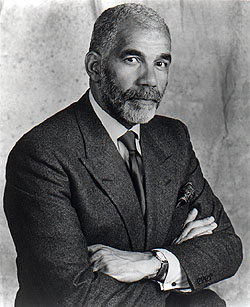
It has been months since Ed Bradley joined the Great Congregation of Ancestors. A true papi chulo (!!!) and renaissance man, let's take a moment to remember him.

Thursday, October 12, 2006

Sarava, Old New Orleans


The memory of things gone is important... Things like old folks singing in the moonlight in the back yard on a hot night or something said long ago. --Louis Armstrong

...and a few word sketches, "old-time stories," in which some of the heart & spirit of the place is preserved:

The Goodness of St. Rocque and Other Stories by Alice Dunbar Nelson (my fav is "The Praline Woman")

He's The Prettiest: A Tribute To Big Chief Allison "Tootie" Montana's 50 Years Of Mardi Gras Indian Suiting (be sure to scroll down and see the pics)